
Stucco Cracks in Florida: Causes, Types & Repair
Stucco cracks are the most common exterior problem on Central Florida homes, and most of them start small. Understanding what causes them, how to tell a harmless crack from one that matters, and when to act can save you from a much larger repair later. This guide explains the basics, so you know what you are looking at before you call anyone.
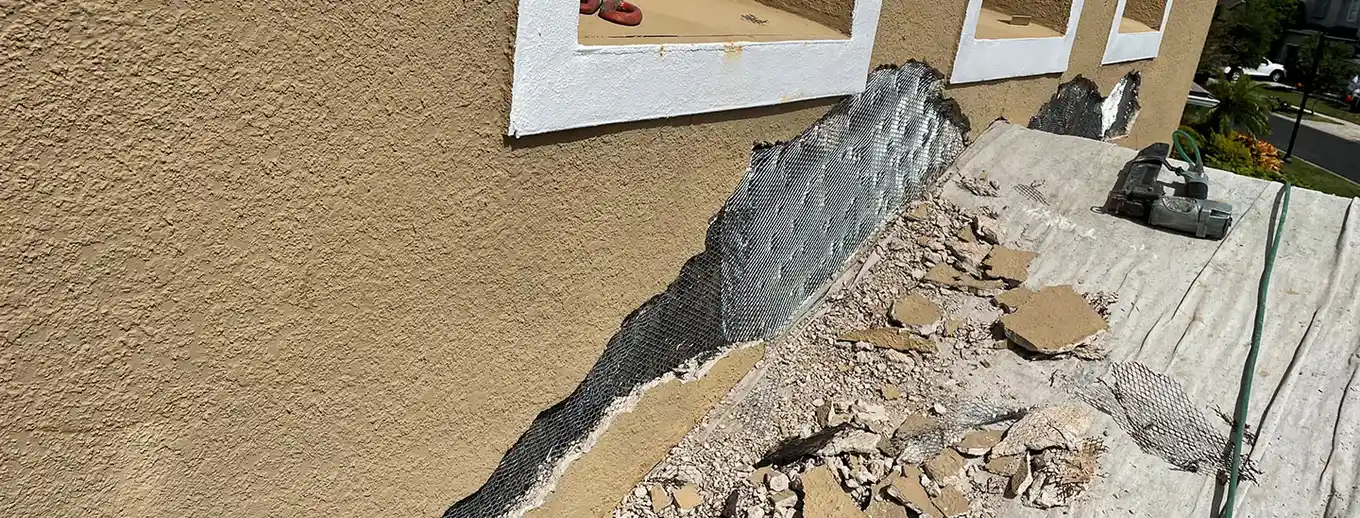
Why stucco cracks in Florida
Most Florida homes are concrete block with a stucco coat, and that assembly is always moving a little. Daily temperature swings and high humidity make the materials expand and contract, homes settle over their first years, and summer storms drive rain against the walls. Over time, those forces open cracks, usually where the wall is weakest: at the corners of windows and doors, along block joints, and at changes in the wall. None of this is unusual, but it does mean cracks are a question of when, not if.
The main types of stucco cracks
Not every crack means the same thing, and telling them apart is the first step.
- Hairline cracks. Thin enough that you have to look for them. Almost always the finish coat doing what finish coats do as they cure and move, and almost never a reason to panic - but they are still an opening, and openings take on water.
- Spider or map cracking. A web of fine lines across an area, like crazing on old pottery. It is a surface story rather than a structural one, and it usually reflects how the finish was mixed or applied.
- Wider cracks that keep opening. These are the ones to take seriously. They tend to run diagonally from the corners of windows and doors, or step along the block joints, and they mean something is moving or something is wet.
A rule of thumb
When a crack is worth worrying about
A good rule of thumb: hairline cracks are usually cosmetic, while cracks that are widening, running diagonally from corners, or showing staining and soft spots nearby suggest something more.
Staining is the other important tell, because it means water may already be behind the finish, and at that point sealing the surface alone can trap moisture. If you see it, have the wall looked at rather than waiting.
One important limit
If a crack is genuinely structural - if it is wide, still moving, stepping through block courses, or accompanied by doors and windows that have stopped closing properly - that is beyond a stucco repair, and it is beyond what any stucco contractor should be telling you. That is a job for a structural engineer, and we will say so rather than sell you a patch over it.
Why cracks should not be ignored
Even cosmetic cracks are an open door for water, and in a humid, storm-prone climate that water eventually causes bigger problems: staining, soft spots, and delamination that cost far more to fix than the original crack. Sealing cracks while they are small is inexpensive insurance against the water damage they otherwise invite.
How stucco cracks are repaired
A lasting crack repair does three things: it reads the crack correctly, it seals it with a flexible material suited to the climate, and it rebuilds the surface texture so the patch blends into the wall. The texture step is what most surface fixes skip, which is why so many patched cracks stay visible. For cracks that involve moisture or keep returning, the cause has to be addressed, not just the surface. That is where professional stucco crack repair comes in.
In summary
The bottom line
Stucco cracks are normal on Florida homes, but they are worth watching.
Seal the small ones early, get a professional look at the widening or staining ones, and you will keep a minor issue from becoming a major repair.
Takeaway
To understand the full range of exterior stucco work, see our stucco repair hub, or get a free estimate if you want someone to look at your walls. Anicette Stucco is insured, with more than 15 years repairing stucco across Central Florida and a 4.8-star rating from 48 Google reviews. Call (407) 456-2006 or (863) 398-3871.