
Stucco Waterproofing & Sealing in Central Florida
Stucco waterproofing adds a protective layer of sealant and coating to a stucco wall so it resists the moisture that Central Florida's humidity and storms constantly push at it. Sealing does not make a wall leak-proof. What it does is reduce how readily a porous or lightly cracked finish takes on water, which in turn slows the cracking and staining that moisture drives. How much difference it makes depends on the product, the condition of the wall and the exposure, so it is protection rather than a cure, and it is only effective on a wall that is already in good repair. Anicette Stucco has protected stucco across Lake County for more than 15 years. We are insured and every estimate is free.
Call (407) 456-2006 or get a free estimate.
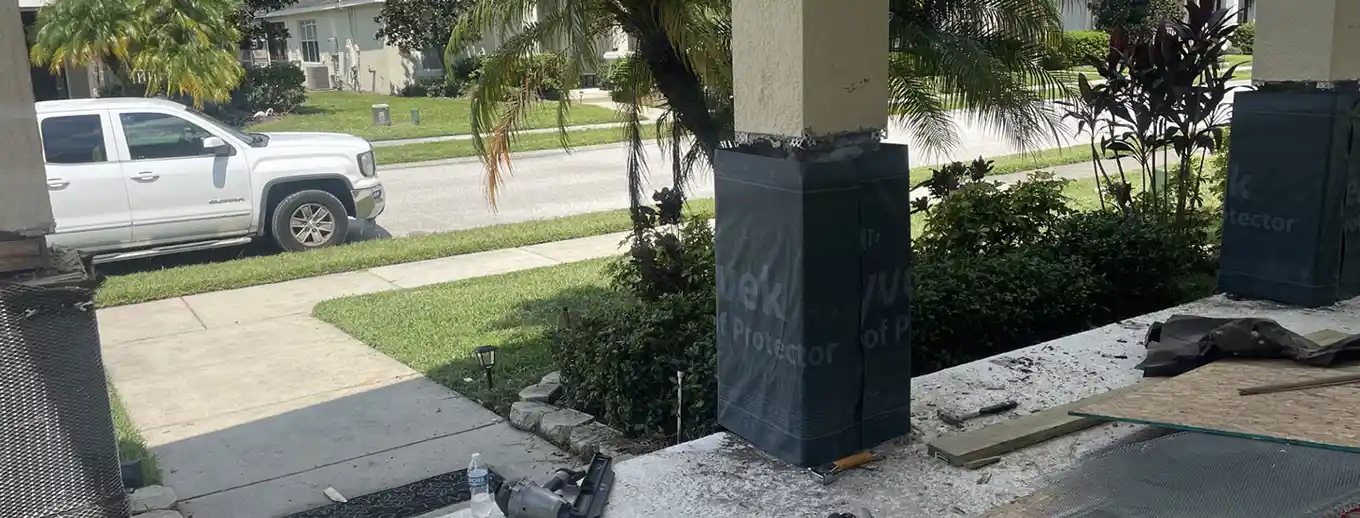
What waterproofing and sealing do
A sound stucco wall already sheds most water, but hairline cracks, porous finishes, and aging surfaces let moisture seep in over time. Sealing fills and coats those pathways so less water penetrates, which helps prevent the slow damage that leads to bigger repairs. It reduces the moisture that drives cracking and staining, though a sound wall is what makes it effective.
When to seal your stucco
- After crack repair, to protect the freshly sealed wall.
- On older or porous finishes that soak up moisture.
- Before a wet season as preventive maintenance.
- On walls that face driving rain or heavy sun exposure.
Sealing works with repair, not instead of it
Sealant is not a substitute for fixing a wall that is already letting water in. If moisture is behind the finish, sealing the outside can trap it, so we address any active problem first - that is our stucco water damage repair work - and then apply protection to a sound wall. For the full picture of caring for stucco, start at our stucco repair hub.
Our sealing process
Step 01 of 05
Assess.
We check the wall for cracks, moisture, and finish condition.
Where this sits in the wall
- Concrete block
- Weather barrier
- Metal lath
- Base coat
- Finish + texture
The cause is usually behind the finish, in the block or the barrier - not in the crack you can see.
What sealing will not do
It is worth being blunt about the limits, because this is a service that is frequently oversold. Sealing a stucco wall reduces how much moisture penetrates the finish.
- 01It does not make the wall waterproof.
- 02It will not stop water entering through a failed seal around a window.
- 03It will not fix a drainage problem that is directing runoff at your foundation.
- 04It will not help a wall that is already wet - in that case it actively hurts, by trapping the moisture inside.
Anyone who tells you a coating makes a wall leak-proof is selling you something.
When sealing is genuinely worth doing
Where it earns its money is on a sound wall in an exposed position.
- A south or west elevation taking direct sun and driving rain01
- An older but structurally sound finish that has become porous02
- A wall that has just been crack-repaired and you want to protect the work03
- A property heading into storm season after a dry, stable repair04
In those situations, reducing how much water the finish takes on slows the cycle of cracking and staining.
It is a maintenance cost rather than a repair cost, which is generally the cheaper end of this trade to be at.
It can, and that is exactly why we will not seal a wall we have not looked at. A coating over a wall that is already taking water makes the eventual repair worse, not better.
It depends far more on exposure than on any figure you can quote in advance. Ultraviolet light is what wears a coating out, so a south or west elevation will be due again well before a shaded one on the same house. Watch the wall rather than the calendar.
On a sound wall, yes - it is one of the few jobs on this site a homeowner can reasonably do. The preparation is what decides the result: a coating bonded to chalk or dust will not last, however good the product is.
Coatings can be clear or matched to the finish; we discuss options during the estimate.
Yes. Sealing is a maintenance job, and we will tell you plainly whether your wall is a candidate for it or needs repair first.
Sealing is maintenance, not a cure
The right way to think about sealing a stucco wall is as maintenance, in the same category as clearing your gutters or checking the sealant around your windows.
What it does
It slows the rate at which a sound wall degrades. It buys you time.
What it cannot do
What it cannot do is repair, and it cannot compensate for a wall that has a live problem.
If your wall is cracking because it is moving, sealing it will not stop it moving. If it is staining because water is entering above, sealing it will not stop the water. Fix the fault, then protect the result. It is also worth saying that sealing is not a permanent state. A coating has a service life, and in this climate the sun shortens it. So the sensible pattern is to protect a sound wall, watch it, and reapply when the wall tells you it is due, rather than treating one application as a job finished forever.
Get a free waterproofing estimate
Protect your stucco before moisture turns into a bigger repair. Call (407) 456-2006 or (863) 398-3871 or get a free estimate. Insured, more than 15 years in Central Florida, and rated 4.8 stars across 48 Google reviews.