
Synthetic Stucco & EIFS Repair in Central Florida
EIFS repair restores synthetic stucco cladding, the multi-layer exterior system built over rigid insulation rather than concrete block. EIFS stands for Exterior Insulation and Finish System, and while it looks like traditional stucco from the curb, it behaves differently and fails differently, which is why it needs a contractor who knows the system. Anicette Stucco repairs both traditional and synthetic stucco across Central Florida, and we have worked with these exteriors for more than 15 years. We are insured and every estimate is free.
Call (407) 456-2006 or get a free estimate.
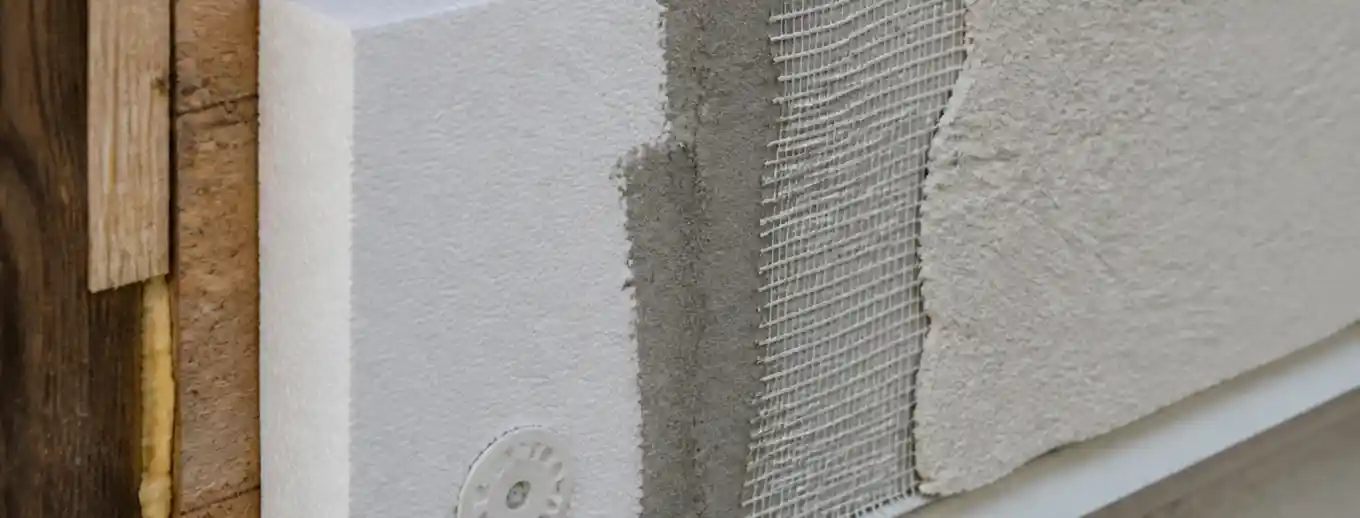
How EIFS differs from traditional stucco
Older "barrier" EIFS in particular had no drainage path at all. Newer drainable EIFS is built with a drainage plane specifically to address that, so not every synthetic wall behaves the same way, and part of the assessment is working out which kind you have.
What holds true across all of them is that moisture management, not cosmetic patching, is the center of the job.
Common EIFS problems
If your synthetic stucco is cracking or staining, send a photo when you get a free estimate and we will give you a first steer. On EIFS in particular, what matters is usually behind the finish, so we will not price it from a photograph.
- Cracks in the finish coat, often at joints, corners, and penetrations.
- Moisture intrusion around windows, doors, and flashing where the seal has failed.
- Soft spots or delamination where water has reached the substrate.
- Impact damage to the relatively soft finish surface.
- Failed sealant joints that let water behind the system.
Our EIFS repair process
Step 01 of 05
Assessment.
We assess the finish and the details around it for the signs of trapped moisture, because that determines the repair. On EIFS the certainty comes from opening the system, not from the surface, and we will say when that is the only honest next step.
Where this sits in the wall
- Concrete block
- Weather barrier
- Metal lath
- Base coat
- Finish + texture
The cause is usually behind the finish, in the block or the barrier - not in the crack you can see.
Why the right contractor matters for EIFS
Because EIFS hides moisture behind its finish, a surface-only patch can seal water in and let hidden damage grow.
- Reading the system.
- Controlling the water path.
- Rebuilding the layers, not just skimming the outside.
That is the difference between a repair that lasts and one that masks a spreading problem.
How to tell whether you have EIFS
From the street the two systems look almost identical, which is exactly the problem. The most reliable homeowner test is to tap the wall.
Sounds solid
Traditional stucco over block feels hard and sounds solid.
Sounds hollow
EIFS, because it sits over insulation board, sounds and feels comparatively hollow and gives very slightly under a knuckle.
- Thick, rounded detailing around windows and trim
- A surface that dents rather than chips
If you are unsure, we will confirm it when we look at the wall, and the answer genuinely matters, because the two systems are repaired completely differently.
Why EIFS repairs fail
Most failed EIFS repairs failed for the same reason: someone treated it like traditional stucco.
- 01Patched the surface.
- 02Matched the texture.
- 03Left the water path untouched.
On a block wall that can still work, because the wall breathes and dries. On EIFS it is far less forgiving. Water that gets past the finish has much less opportunity to dry than it would on block, and on an older barrier system, which has no drainage path built into it, often none at all. So the patch can seal moisture in against the substrate while the damage continues out of sight. Even on a newer drainable system, a repair that ignores the drainage plane can block the very path the wall depends on. That is why a proper EIFS repair spends most of its effort on flashing, sealant, and the layers, and comparatively little on the cosmetic finish.
EIFS is an Exterior Insulation and Finish System, a synthetic stucco cladding built over insulation board rather than concrete block.
No. EIFS is layered and holds moisture behind the finish, so repair focuses on the moisture path and rebuilding the layers correctly.
Yes. EIFS finishes are applied rather than troweled like traditional stucco, so matching one is a different skill - but it is a matchable one.
They look similar. We confirm it when we come out and look at the wall, and that estimate is free.
Yes. On EIFS we will not quote from a photograph, so the on-site visit is the whole basis of the number, and it costs you nothing.
Why EIFS got its reputation
EIFS acquired a poor name in parts of the country after a wave of moisture failures, and it is worth being fair about why. The system itself is not inherently defective; it is unforgiving.
It depends heavily on water being kept out at the details - the flashing, the sealant, the terminations - because unlike a block wall it has little capacity to dry itself out if water gets past them, and an older barrier system has almost none.
Details done well
EIFS performs.
Details done carelessly
It can fail and hide the failure.
That is exactly why an EIFS repair has to be a details job first and a finish job second, and why we will not quote an EIFS repair from a photograph. On a block wall a photo often tells you most of what you need. On a synthetic wall the thing that matters is usually behind the finish, and the only honest way to price it is to look.
Get a free EIFS repair estimate
Synthetic stucco hides its problems, so a knowledgeable repair matters. Call (407) 456-2006 or (863) 398-3871 or get a free estimate. Insured, more than 15 years in Central Florida, and rated 4.8 stars across 48 Google reviews.