
Stucco Water Damage: Signs, Causes & What to Do
Water damage is the most serious problem stucco faces in Florida, because it works behind the finish where you cannot see it until it has spread. Catching it early is the difference between a small repair and a major one. This guide explains the signs to watch for, what causes them, and what to do next.
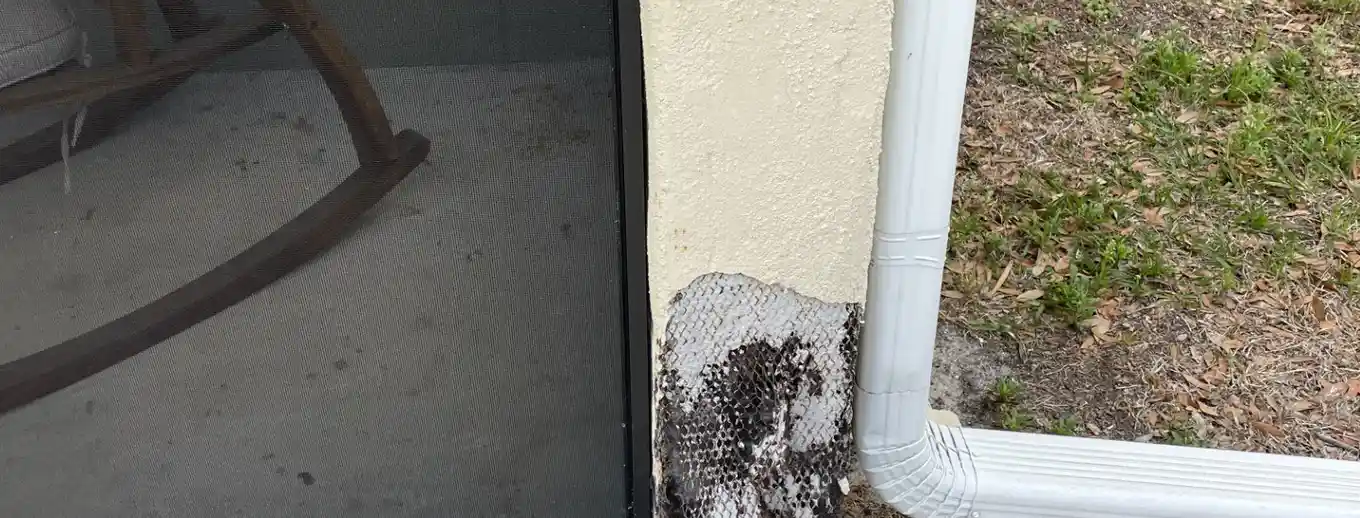
The routes water actually takes
Almost nobody's stucco fails in the middle of a wall. It fails at the edges and the interruptions: the seal around a window that hardened and pulled away, the joint where the roofline meets the wall, a crack nobody closed, a penetration for a light or a hose bib that was never detailed properly. Those are the places worth your attention, because those are the places water actually uses. And in a climate this humid, water that gets in through one of them does not get a chance to leave.
The warning signs
Your wall usually tells you before the damage is severe. Watch for:
- Staining or dark streaks, often below windows or at corners.
- Soft or spongy stucco that gives when you press it.
- Bubbling, blistering, or peeling paint and finish.
- A musty smell or interior wall damage near an exterior wall.
- Cracks that keep coming back after being patched.
Any one of these is worth a closer look. Staining and soft spots in particular are strong signs that moisture is already at work.
Why you should not just seal over it
It is tempting to caulk a crack or paint over a stain, but if water is already behind the finish, sealing the surface traps it. The moisture keeps deteriorating the wall from the inside, and the problem resurfaces, often worse. Water damage has to be addressed at the source, not just the surface, which is why it is different from a simple cosmetic crack.
What happens if it is ignored
The thing homeowners underestimate is that this problem compounds. Nothing about a wet wall stabilizes on its own. Every season it is left, the wet area is bigger than it was, which means the eventual repair is bigger than it would have been, which is why the cheapest version of this job is always the one you do earliest.
What to do
If you see the signs, the right move is to have it assessed professionally, to find the source before it spreads. Be wary of anyone who tells you the full extent of hidden damage without opening the wall. A proper repair removes the damaged material, corrects what let the water in, rebuilds the moisture barrier, and re-stuccos to match. That is the work of professional stucco water damage repair, and it is worth doing before a small stain becomes a rebuilt wall.
How far the damage usually goes
One thing homeowners consistently underestimate is the distance between where water gets in and where it shows. Water entering at a failed window seal can run down inside a wall and appear as a stain several feet away, or emerge lower down entirely. That is why chasing the stain is a mistake, and why a proper assessment traces the path back to the entry point before anything gets sealed.
Not every returning crack
One sign that is not a water problem
Cracks that keep returning appear on the list above, and most of the time water is why.
There is an important exception.
An important exception
A crack that reopens and keeps getting wider, steps through the block courses, is mirrored on an interior wall, or arrived at the same time doors and windows began sticking, is not telling you about moisture. It is telling you about the building, and that is a structural engineer's question rather than a stucco one. It needs answering before anyone repairs the finish over it.
In summary
The bottom line
Treat staining, soft spots, and bubbling as early warnings, not cosmetic annoyances.
Acting early keeps water damage small.
Takeaway
To see the full range of exterior stucco work, visit our stucco repair hub, or get a free estimate. Anicette Stucco is insured, with more than 15 years repairing stucco across Central Florida and a 4.8-star rating from 48 Google reviews. Call (407) 456-2006 or (863) 398-3871.